1st Place, AI for Entrepreneurs
AstroVerse, AI Business Strategy Platform

- Role
- Co-Architect, Backend & AI Orchestration
- Timeline
- November 2025
- Duration
- 22-hour hackathon
- Team
- Team: Ahmed Saad, Ghassen Naouar, Ahmed Chabbouh, Amine Khalsi, Dorra Ourabi
Overview
AstroVerse turns a rough startup idea into a full set of investor-ready documents in minutes. Eleven AI agents each handle one part of the plan, from market analysis to branding to financials, and the results come out as polished PDFs. We built it in a 22-hour sprint and placed first out of more than 30 teams.
The problem
Founders need a professional business plan to raise money, but consultants are expensive and generic AI tools spit out vague text with no market data, no numbers, and none of the polish an investor expects. Nothing takes a single idea and produces a complete, presentable document set.
What I built
- 01
Eleven specialists, not one generalist
Each agent owns a domain, market analysis, strategy, branding, product, legal, marketing, sales, operations, growth, and the overall plan, and each one's output feeds the next as context.
- 02
Documents that actually look the part
A dedicated service renders every agent's output into a branded PDF, with headers, tables, and charts, using one template per document type.
- 03
Accounts and saved ideas
An auth backend handles sign-in, lets people save and revisit ideas, and kicks off the whole agent pipeline with one call.
- 04
Watch it happen
The dashboard shows each agent's progress live while the set is being generated, then hands over the downloads.
Architecture
The Next.js frontend sends the idea to a FastAPI backend, which triggers an n8n workflow. n8n runs the eleven agents in sequence, each passing context to the next, then hands their output to a finalizer service that renders every document as a PDF. The frontend polls for progress and shows the downloads when they're ready.
Tech stack
Next.js 15.5.4 + React 19.1
shadcn/ui (Radix + CVA), Tailwind 4, Turbopack, Lucide icons, dark mode, real-time agent progress tracking
FastAPI Auth Backend (:8001)
FastAPI 0.118 + SQLModel 0.0.25 + SQLAlchemy 2.0, JWT auth (python-jose), bcrypt, user/prompt/workflow CRUD
n8n Workflow Engine (:5678)
Self-hosted n8n, 11-agent pipeline with context chaining, webhook triggers, and conditional logic
Finalizer Service (:8000)
FastAPI 0.104.1 + WeasyPrint 61.2 + Jinja2 3.1.2, 11 POST endpoints generating branded, print-ready PDF documents
11 AI Agents
Incubator, Market Analyst, Strategist, Brand Architect, Product Manager, Legal Assistant, CMO, CRO, Production Ops, Growth Strategist, Business Planner
Results
1st Place
Won against 30+ teams in a 22-hour sprint
11 AI Agents
Each specialized in one business domain, from market analysis to legal compliance
11 PDF Templates
Professional Jinja2 + WeasyPrint documents with charts, tables, and branded headers
4 Microservices
Frontend (:3000) + Auth (:8001) + n8n (:5678) + Finalizer (:8000)
8 Sample PDFs
MelodyMuse (5 docs) + SyncSonix (3 docs), shipped in the repo as proof of quality
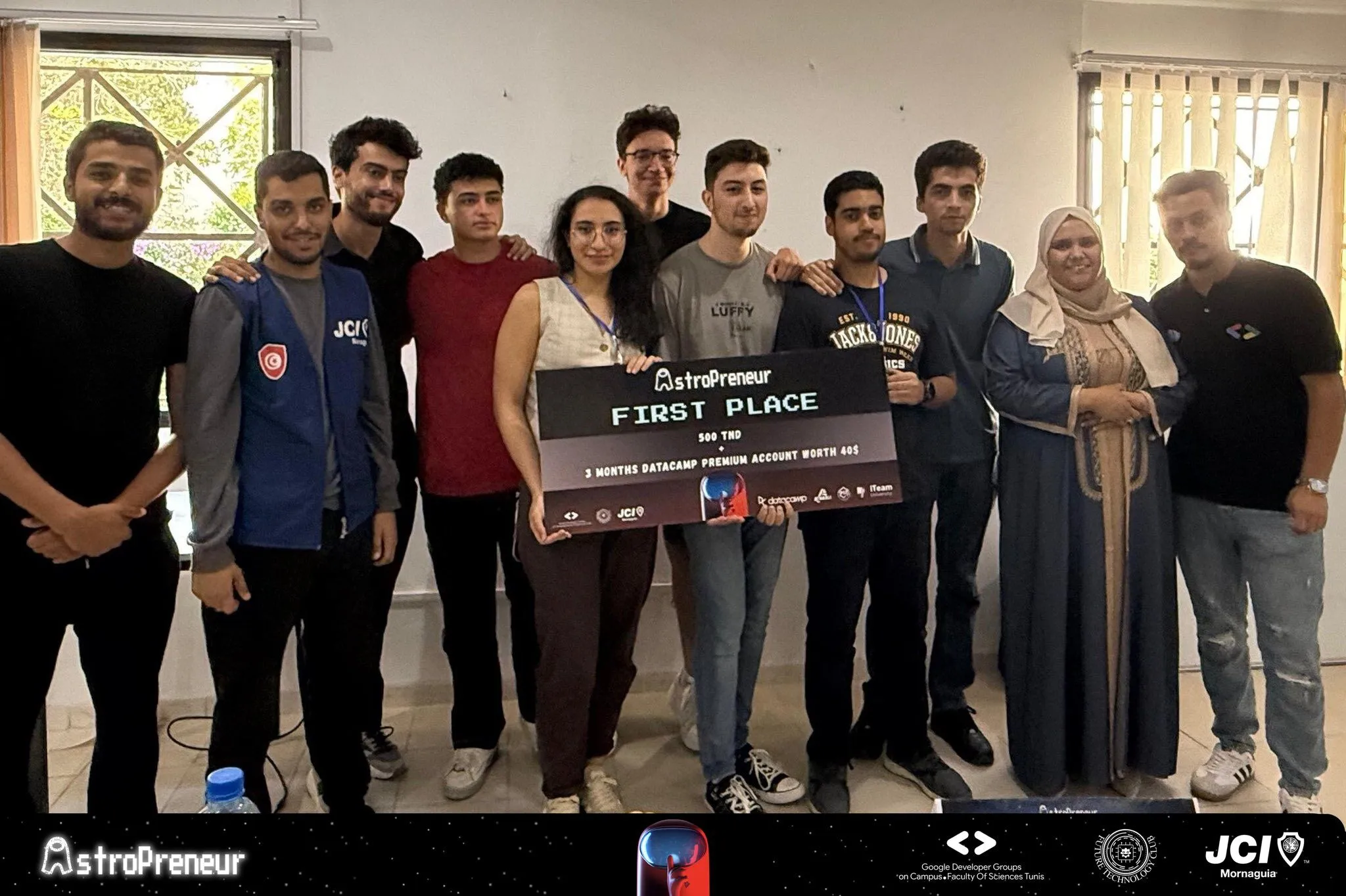
Moments
What I took away
- 01
n8n's visual workflow paradigm is a game-changer for multi-agent systems, visual debugging and hot-reloading saved us hours during the hackathon. Being able to see data flow between all 11 agents in real-time was the difference between finishing and not.
- 02
Context chaining between agents is critical: without it, the financial projections contradicted the market analysis. We solved this by passing summarized context forward through the n8n pipeline so each agent builds on the previous one's conclusions.
- 03
WeasyPrint is underrated for PDF generation, it supports modern CSS (flexbox, grid, custom fonts), which means we designed reports in the browser with Jinja2 templates and rendered them identically as print-ready PDFs. No LaTeX, no Puppeteer.
- 04
Splitting the system into 4 services (frontend, auth backend, n8n, finalizer) during a 22-hour sprint sounds risky, but it meant 5 team members could work in parallel from hour one without merge conflicts or blocking.