Best Pitch, AIxCYBER
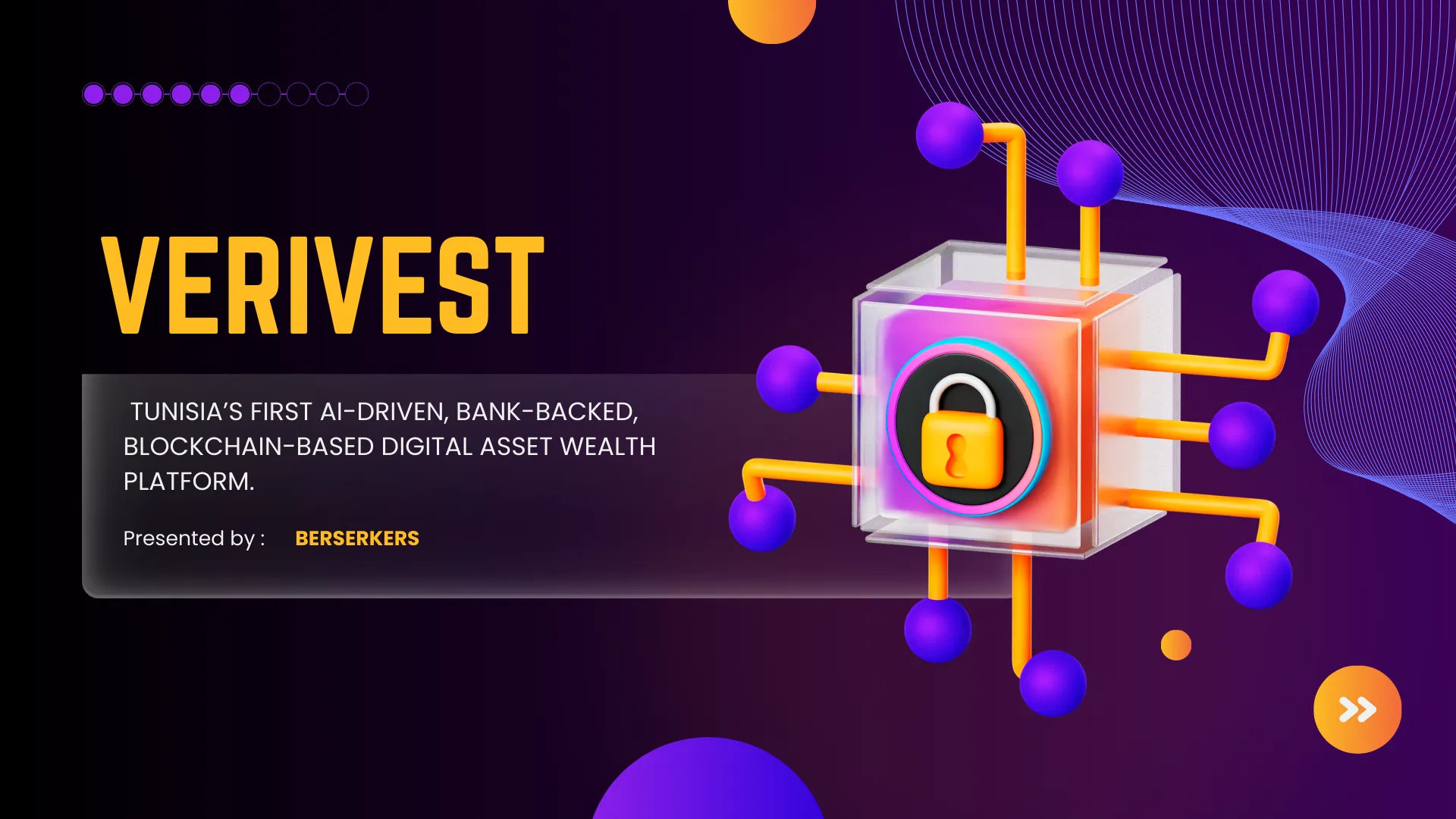
VeriVest, Real Estate Tokenization
- Role
- Co-Architect, Blockchain & Backend
- Timeline
- December 2025
- Duration
- 36-hour hackathon
- Team
- Team: Berserkers
Overview
VeriVest lets ordinary people own a slice of a property instead of the whole thing. It splits each bank-vetted building into 1000 tokens on the Hedera blockchain, keeps a tamper-proof record of everything, and uses AI to price properties and suggest a portfolio for your risk appetite. We built it at the AIxCYBER hackathon and won Best Pitch.
The problem
Buying property in Tunisia takes serious capital, which shuts most people out. There's no way to own a fraction, and due diligence is manual, opaque, and slow. Banks have vetted buildings sitting idle for lack of buyers, while small investors can't touch that kind of asset at all.
What I built
- 01
Fractional ownership on-chain
Each property is registered on Hedera, hashed for proof it hasn't been altered, and split into 1000 tokens people can buy into.
- 02
A tamper-proof paper trail
Every registration, token issue, and transfer is written to an immutable log, so a regulator can replay an asset's entire history with timestamps.
- 03
AI pricing and advice
One workflow estimates a property's price with a confidence range when it's listed; another takes your budget and risk profile and recommends a portfolio from the vetted properties.
- 04
A friendly French-language app
The audit screen walks you from a budget slider and a risk profile to a clear result, with a link to verify each asset directly on the blockchain.
Architecture
A Next.js frontend proxies through its own API routes to an Express backend, which stores data in MongoDB and talks to Hedera for tokens and audit logs. Two n8n workflows handle the AI: one prices a property when it's created, the other builds a portfolio recommendation from the user's risk profile.
Tech stack
Express.js + @hashgraph/sdk
Blockchain backend on :3001, 6 controllers, 2 Hedera services (HCS topics/messages, HTS token creation/issuance)
Hedera HTS (Token Service)
1000 fungible tokens per property, fractional ownership with transfer and balance queries via Hedera Testnet
Hedera HCS (Consensus Service)
Immutable audit trail, each asset gets an HCS Topic, every event (registration, issuance, transfer, risk score) logged as a timestamped message
n8n Webhook Workflows
2 AI workflows: property price prediction (estimatedPriceTND, confidence, range) and audit/portfolio recommendation (risk-aware asset allocation)
Next.js 14.2 + React 18
French-language UI, Framer Motion animations, Radix UI Slider, 3D flip cards, animated score gauges, Lucide icons, Tailwind 3.4
MongoDB Atlas + Mongoose
3 collections: assets (property + blockchain IDs), portfoliorecommendations (AI allocations), riskscores (0–1 scale with model version)
Results
Best Pitch
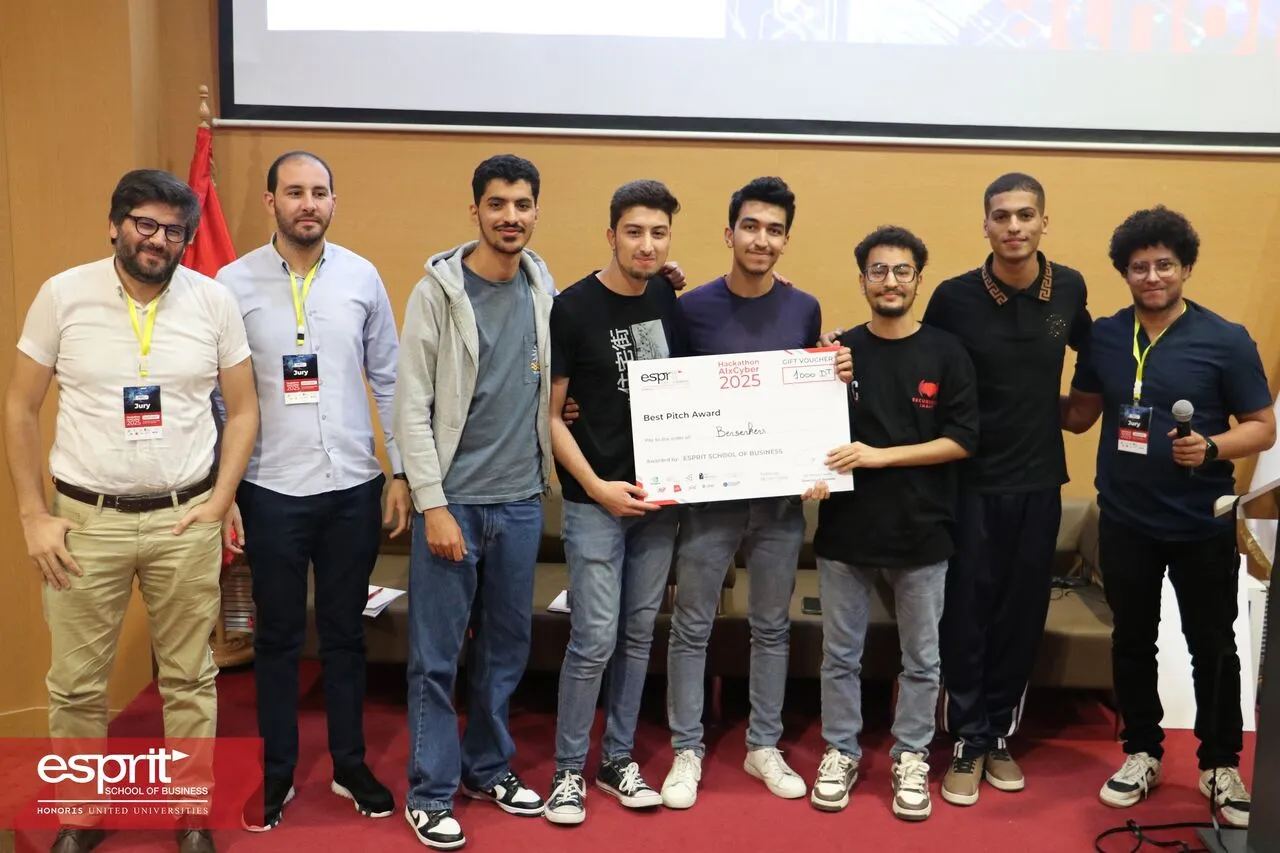
Won Best Pitch award at AIxCYBER hackathon
1000 Tokens/Property
HTS fractional ownership starting from small amounts, SHA-256 hashed for immutability
Immutable Audit Trail
Every event logged on HCS Topics, verifiable on hashscan.io/testnet
3 Risk Profiles
Conservative, Balanced, Visionary, AI tailors portfolio recommendations per profile
n8n AI Workflows
Automated price prediction with confidence scores and portfolio optimization
Moments
What I took away
- 01
Hedera's token service is significantly faster and cheaper than Ethereum for asset tokenization, sub-second finality and predictable ~$0.001 fees. The @hashgraph/sdk made HTS/HCS integration straightforward from Express.js.
- 02
n8n's webhook-based architecture was perfect for the hackathon, we could iterate on the AI analysis logic (price prediction confidence scores, risk-profile-based allocation) visually without touching backend code.
- 03
The 'Best Pitch' win validated that investors care more about the business model (fractional ownership of Tunisian real estate) than the technology (blockchain). Lead with the problem, not the stack.
- 04
Building the entire UI in French (from 'Lancer l'Audit IA' to 'Vérifier sur Hedera') was a deliberate decision for the Tunisian market, localization matters more than technical polish for pitch judges.